
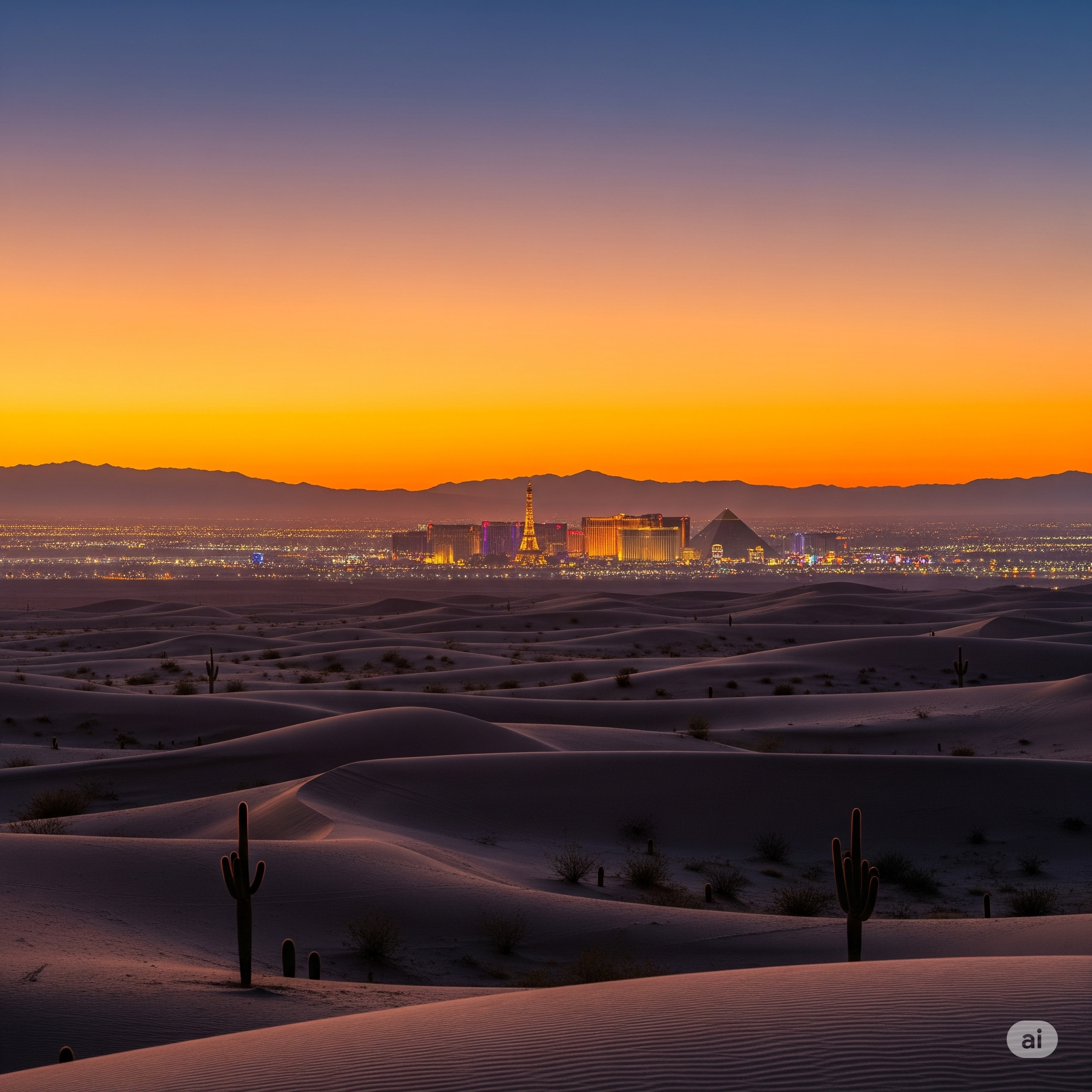
The City of Sin, the Entertainment Capital, the Mecca of Spectacle. Las Vegas has earned all these titles, forging its legend over decades. However, in recent times, a whisper of concern has grown into a clamor: tourism is in decline. This is not an isolated problem, but a wake-up call for a metropolis that cannot afford to be complacent. The big question is: what led to this tourist decline, and how can the city reinvent itself to secure its future?
The Las Vegas tourism crisis was not a sudden event but a progressive process. While the COVID-19 pandemic accelerated the blow, the plateau the user mentioned had been brewing for years. Las Vegas has always relied on a business model that combines gambling, world-class shows, luxury dining, and vibrant nightlife. This model, while successful, has been replicated in other parts of the world, and global competition has intensified. Cities like Dubai, Macau, and Singapore have invested heavily in luxury attractions, casinos, and convention centers, attracting a new generation of travelers looking for different experiences.
The causes of this slowdown are multiple and complex. First, market saturation is a key variable. For tourists, the Las Vegas offerings have become predictable. The lack of constant renewal in cultural and leisure proposals has led to stagnation. Long-running shows, which were once a magnet for tourism, now face an audience that seeks novelty and more personalized, fleeting experiences.
Second, responsibility is shared. City administrators, hotel and casino owners, show producers, and business people must understand that their destiny is intertwined. An iconic city requires intellectual and architectural support that cannot afford to pause. When one part of the ecosystem stagnates, the entire system suffers. The administration must be a facilitator of innovation, streamlining permits and offering incentives for risky and creative proposals. Business owners, for their part, must abandon proven formulas and take risks on new offerings that generate curiosity and a new type of customer.
Concern is the catalyst for action. The challenge should not be seen as an obstacle, but as a golden opportunity for a renaissance. This is where creativity, strategy, and technology come into play. The reinvention of Las Vegas requires a joint analysis of the variables and the implementation of innovative solutions.
A fundamental pillar of this reinvention is the update of marketing strategies. Las Vegas cannot continue to sell itself solely as the city of casinos. It must embrace its new identity as a hub for innovation, a convention center, and a mecca for sports and e-sports. Digital marketing, using platforms like TikTok, Instagram, and YouTube, can showcase a more dynamic Las Vegas with unique experiences and exclusive events, far from the stereotypical image. Targeted campaigns, aimed at a younger audience and emerging international markets, are essential.
Additionally, the integration of digital tools, such as artificial intelligence (AI), can be the key to the future. AI not only optimizes hotel and casino management but can also personalize the tourist experience. Imagine an app that, through AI, suggests shows, restaurants, and events in real-time, based on your preferences and location. Or a virtual assistant that offers a unique gaming experience tailored to your interests. Generative AI can be used to create more appealing advertising campaigns, design interactive experiences in hotels, and even predict tourism trends so the city can anticipate demand.
Las Vegas has the infrastructure and talent to lead the next wave of the entertainment industry. The call to action is for collaboration. Designers, programmers, artists, entrepreneurs, and politicians must sit at the same table to design the city’s future. The challenge of reinvention is, in essence, a challenge of leadership and vision. A renaissance that not only recovers tourist flow but also cements Las Vegas’s position as a pioneering city, a metropolis that not only adapts but defines the future of global entertainment. The show must go on, but with a new script.