
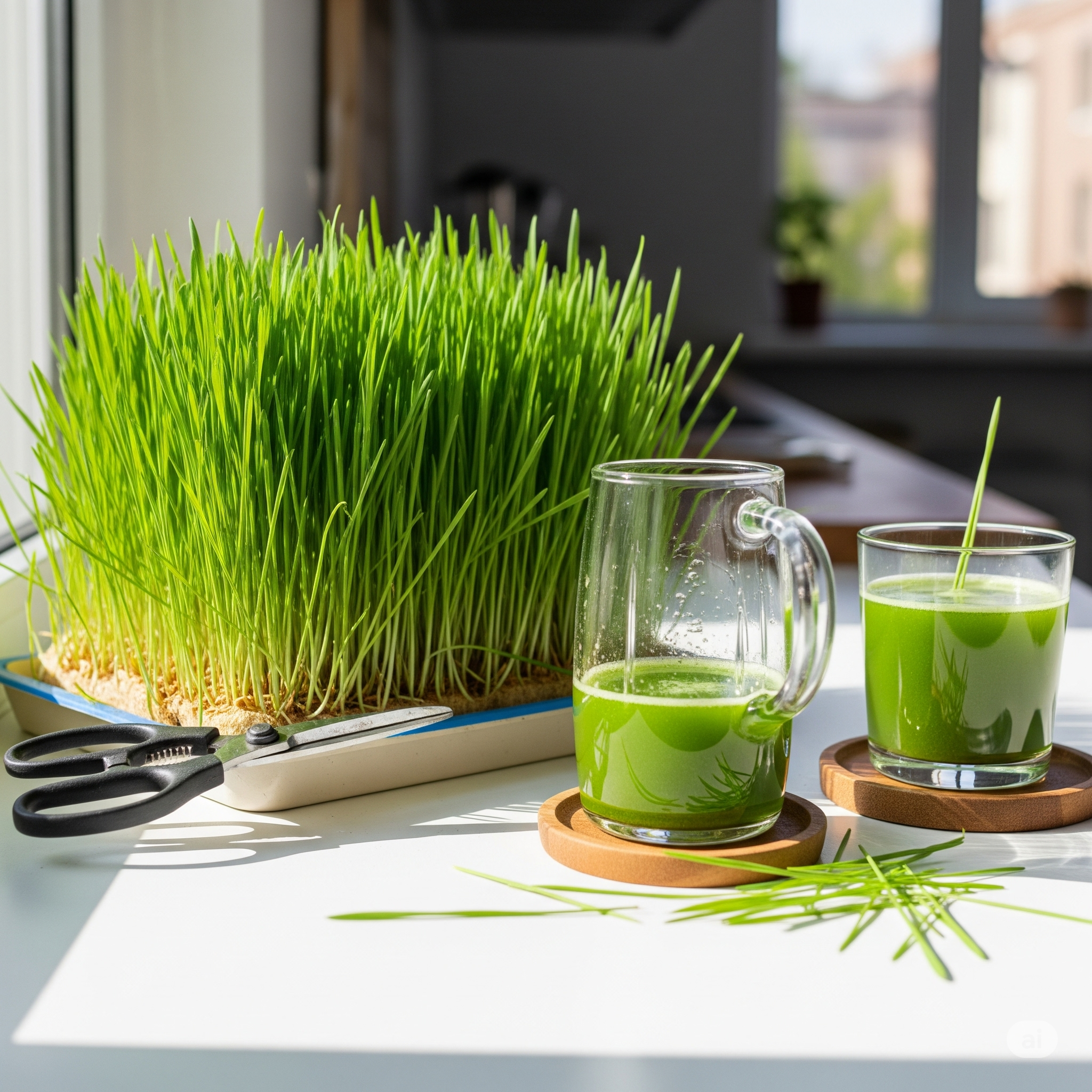
In the fast-paced world of health and wellness, few trends have maintained their glow for as long as green juices. Far from being a passing fad, these powerful drinks have earned a place of honor in the daily routine of thousands of people. The reason is simple: they offer a concentrated dose of nutrients that we don’t always get in our usual diet. But there’s one specific “green juice,” often called the “elixir of life,” that stands out for its simplicity and extraordinary benefits: wheatgrass juice.
The story behind this drink is as fascinating as its promises. Unlike other juices that require a complex list of ingredients, wheatgrass juice comes from a single source, the young grass of the wheat plant (Triticum aestivum). Its power lies in its incredible concentration of chlorophyll, vitamins, minerals, and antioxidants, which work together to revitalize the body at a cellular level. It’s a drink that invites you to reconnect with nature from the comfort of your own kitchen, a viable and powerful alternative for those looking for a significant boost in their health.
Grow Your Own Source of Life
One of the greatest advantages of wheatgrass juice is that you can grow your main ingredient at home. It’s a simple, economical, and rewarding process that ensures a constant source of freshness. The key is to find wheat seeds that have not been treated with agrochemicals, also known as organic “wheat berries.” Specialty health food stores, agricultural cooperatives, or websites like True Leaf Market and Barton Springs Mill are excellent starting points.
To begin, you just need a handful of these seeds and a tray with soil. Soak them overnight and then spread them over the moist soil in the tray, without burying them. With light daily watering and good lighting, in just 7 to 10 days, the wheatgrass will grow lush and ready to be harvested. Cut a handful with clean scissors, making sure not to damage the roots, and you’ll have the perfect amount for your juicer.
The Power Behind the Wheatgrass
The benefits of this drink have been the subject of numerous studies. Wheatgrass is a densely nutritious superfood, loaded with vitamins A, C, and E, as well as iron, calcium, and magnesium. Its star component, chlorophyll, has a molecular structure similar to human hemoglobin, which has earned it the nickname “the blood of the plant.” It is credited with the ability to purify the blood, increase oxygen in the body, and promote detoxification. A 2018 study published in Medical News Today highlighted wheatgrass’s potential to reduce oxidative stress and fight inflammation, making it a powerful ally for overall health.
Drink the elixir of life
It is known that the taste of wheatgrass juice is not for everyone. Its intensity, sometimes described as “earthy” or “bitter,” can be a hurdle for those who try it for the first time. But nothing compares to the shot of vital energy it gives us. Its effect is almost immediate: a feeling of mental clarity, lightness, and vitality that many do not find in other energy drinks. It is a reward for the audacity of trying something different, an experience that connects you directly with the pure energy of nature.
Guide to Consumption and Precautions
The potency of wheatgrass juice requires moderate intake. The general suggestion is to start with a small amount, between 1 and 2 ounces (about 30-60 ml), on an empty stomach. As your body gets used to its effects, you can increase the dose to 2 to 4 ounces per day, although the key is to listen to your body. While detoxification symptoms like nausea or mild dizziness may appear at first, these are usually temporary.
As for its preservation, it is a juice that is recommended to be drunk fresh. Its active enzymes and nutrients begin to degrade as soon as the juice is extracted. If you need to store it, you can keep it in an airtight, dark container in the refrigerator for a couple of hours, but no more. The best way to maximize its benefits is to consume it as soon as possible after it has been extracted.
To improve its flavor, you can combine it with other vegetable or fruit juices. Lemon and apple, for example, are excellent allies that not only improve the taste but also complement its nutritional properties.
A Reference to the Past and the Future
In the previous article (TS15), we mentioned oxalates, those compounds present in leafy green vegetables like spinach, whose excessive consumption can be a concern for some people. Wheatgrass juice, unlike other green juices, has a notably low oxalate content, making it an excellent alternative for those seeking the benefits of green juices without this particular concern.
In short, wheatgrass is a suggestion that invites you to evaluate possibilities that contribute to our well-being. With its high content of chlorophyll, vitamins, and minerals, and its simple at-home growing process, it is a powerful option for those looking for a real change in their health.In TS17, we will delve into the alternative offerings on the market.
Important disclaimer: The information contained in this article is for informational purposes only and is not a substitute for the advice, diagnosis, or treatment of a healthcare professional. Always consult your doctor or nutritionist before starting any dietary plan.